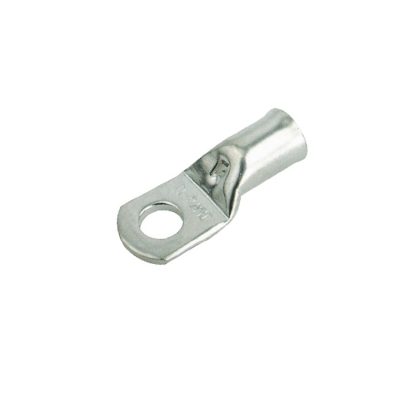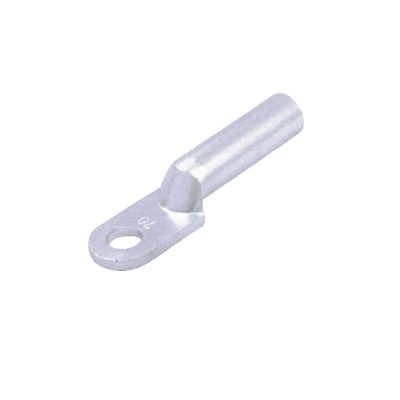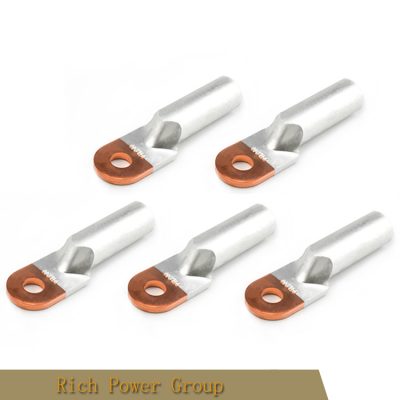
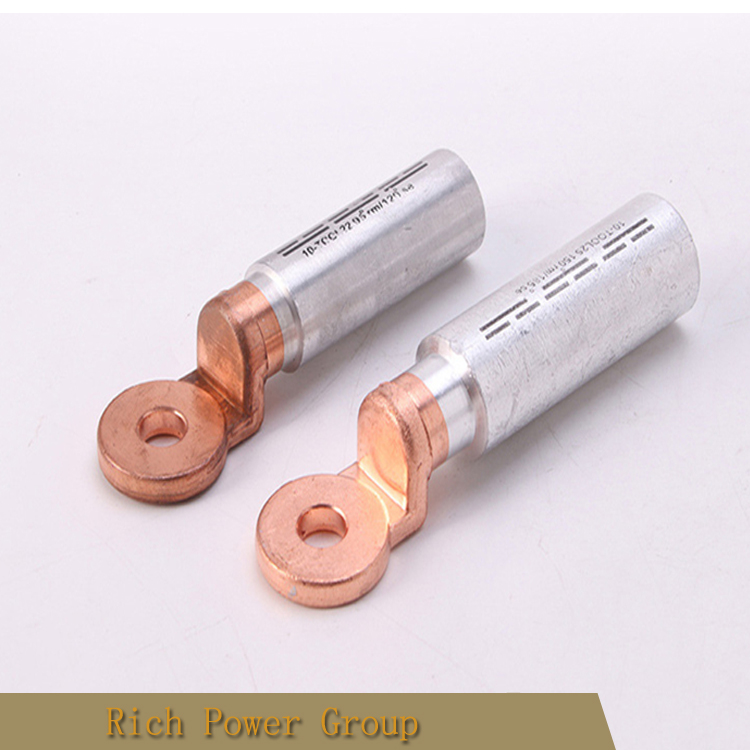
Cu-Al Bimetallic Cable Lug (CAL / DTL-2 Series)
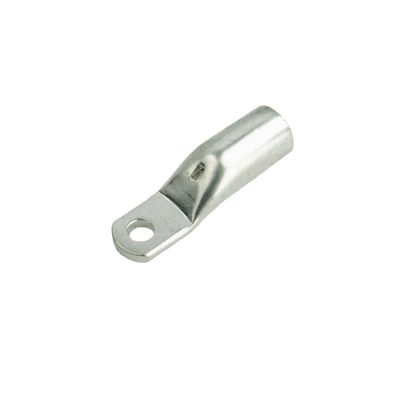
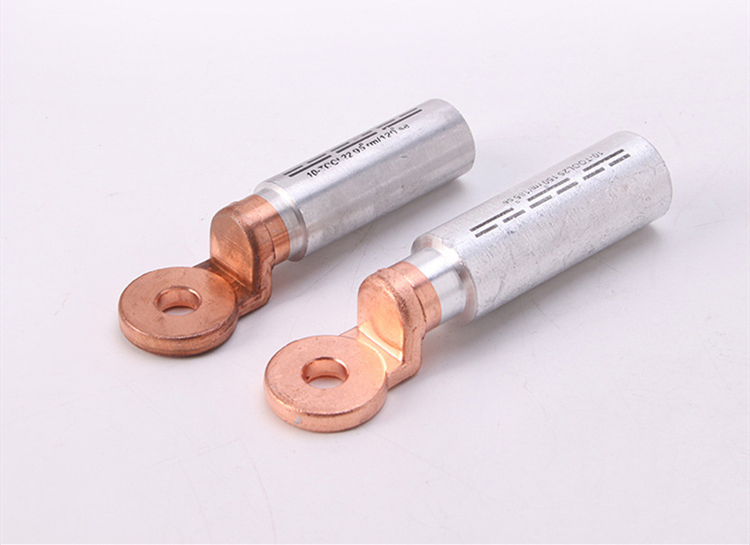
The CAL / DTL-2 series bimetallic cable lug is designed for reliable transition connection between aluminum conductors and copper terminals in electrical distribution systems.
It is widely used for circular aluminum wires, sector-shaped aluminum conductors, power cables, and copper terminals in electrical equipment.
Manufactured from high-purity materials:
Copper (Cu) 99.9% and Aluminum (Al) 99.5%, ensuring excellent conductivity and mechanical strength.
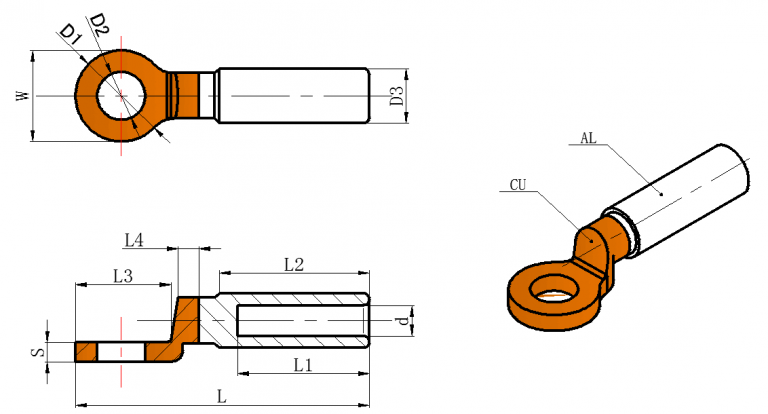
The copper palm and aluminum barrel are joined by friction welding technology, ensuring a strong metallurgical bond and stable electrical performance.
To prevent oxidation, the aluminum barrel is pre-filled with anti-oxidation grease. During crimping, the compound is forced into the conductor strands, improving contact reliability.
—
Product Features
- Low contact resistance for stable electrical performance
- High mechanical strength at Cu-Al transition joint
- Friction welded copper-aluminum structure
- Pre-filled grease to prevent aluminum oxidation
- Suitable for standard crimping tools
- Long service life in harsh environments
—
Applications
- Power distribution cabinets
- Transformer connections
- Switchgear systems
- Industrial electrical installations
- Renewable energy systems (solar & wind)
—
Specifications and Types
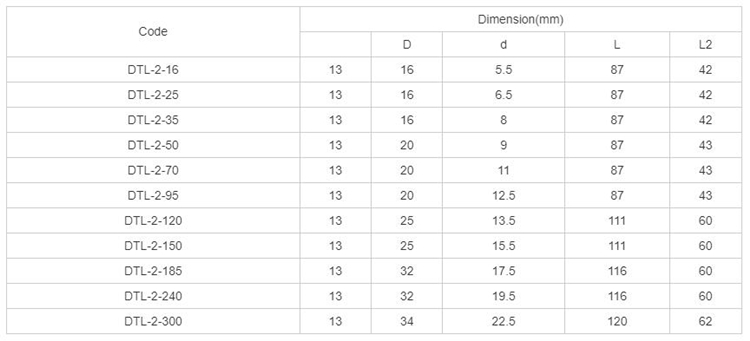
Available CAL / DTL-2 series models cover a wide range of conductor sizes from DTL-2-16 to DTL-2-300, suitable for different electrical installation requirements.


—
Material & Manufacturing
The copper-aluminum interface is produced using friction welding technology, ensuring a durable metallurgical bond between copper and aluminum.


—
Packaging & Delivery

—
FAQ
What is a bimetallic cable lug used for?
It is used to connect aluminum conductors to copper terminals in electrical distribution systems.
Why use Cu-Al bimetal lugs instead of copper only?
They prevent galvanic corrosion between copper and aluminum and ensure long-term stable conductivity.
What is friction welding in cable lugs?
It is a process that permanently joins copper and aluminum using mechanical friction and pressure without melting.