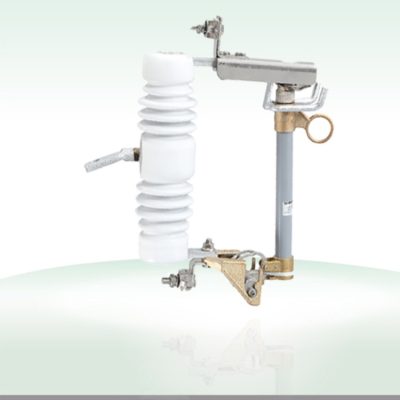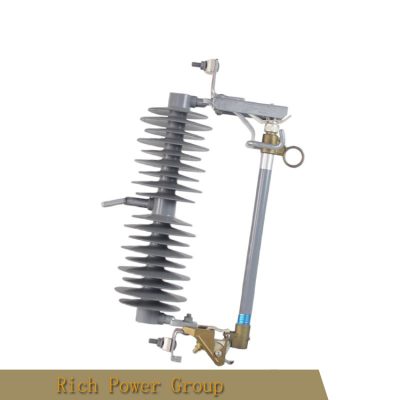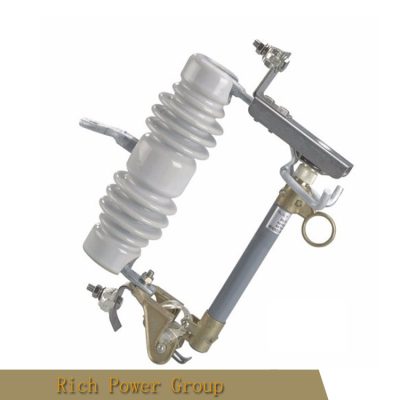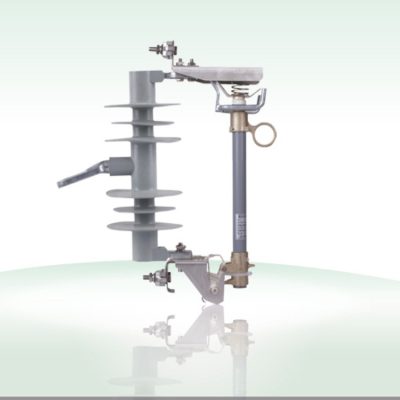
Our 11-12kV 200A Polymer Dropout Fuse Cutout is engineered for superior over-current protection in distribution systems. Utilizing high-grade silicone rubber for the insulator, it offers exceptional anti-pollution performance and mechanical strength compared to traditional porcelain. Designed for extreme outdoor environments, it ensures reliable fault isolation and easy maintenance for overhead power lines.


Installation of Drop – Out Fuse
(1) When installing, the fuse element should be tightened (so that the fuse element is subjected to a pulling force of approximately 24.5N), otherwise, it is likely to cause the contacts to overheat.
(2) The fuse should be firmly and reliably installed on the cross arm (structure), without any shaking or wobbling.
(3) The fuse tube should have an inclination angle of 25°±2° downward, so that the fuse tube can quickly drop by its own weight when the fuse element melts.
(4) The fuse should be installed on a cross arm (structure) with a vertical distance from the ground of not less than 4m. If it is installed above the distribution transformer, it should maintain a horizontal distance of more than 0.5m from the outer contour boundary of the distribution transformer to prevent other accidents in case the fuse tube falls.
(5) The length of the fuse tube should be adjusted moderately. It is required that after closing, the tongue of the duckbill can hold more than two – thirds of the length of the contact to avoid misoperation of self – dropping during operation. The fuse tube should not be jammed against the duckbill either, to prevent the fuse tube from failing to drop in time after the fuse element melts.
(6) The fuse element used must be a standard product from a regular manufacturer and have a certain mechanical strength. Generally, it is required that the fuse element can withstand a pulling force of at least 147N.
(7) The 10kV drop – out fuse is installed outdoors, and the phase – to – phase distance is required to be greater than 70cm.
(2) The fuse should be firmly and reliably installed on the cross arm (structure), without any shaking or wobbling.
(3) The fuse tube should have an inclination angle of 25°±2° downward, so that the fuse tube can quickly drop by its own weight when the fuse element melts.
(4) The fuse should be installed on a cross arm (structure) with a vertical distance from the ground of not less than 4m. If it is installed above the distribution transformer, it should maintain a horizontal distance of more than 0.5m from the outer contour boundary of the distribution transformer to prevent other accidents in case the fuse tube falls.
(5) The length of the fuse tube should be adjusted moderately. It is required that after closing, the tongue of the duckbill can hold more than two – thirds of the length of the contact to avoid misoperation of self – dropping during operation. The fuse tube should not be jammed against the duckbill either, to prevent the fuse tube from failing to drop in time after the fuse element melts.
(6) The fuse element used must be a standard product from a regular manufacturer and have a certain mechanical strength. Generally, it is required that the fuse element can withstand a pulling force of at least 147N.
(7) The 10kV drop – out fuse is installed outdoors, and the phase – to – phase distance is required to be greater than 70cm.
Operation of Drop – Out Fuse
Under normal circumstances, it is not allowed to operate the drop – out fuse under load, and it is only allowed to operate no – load equipment (lines). However, for branch lines of 10kV distribution lines in rural power grids and distribution transformers with a rated capacity of less than 200kVA, load operation is allowed according to the following requirements:
(1) The operation should be carried out by two people (one for supervision and one for operation). However, they must wear insulating gloves that have passed the test, insulating boots, and protective goggles, and use a qualified insulating rod that matches the voltage level for operation. Operation is prohibited in thunderstorms or heavy rain.
(2) When opening the switch, it is generally specified to open the middle phase first, then the leeward side phase, and finally the windward side phase. This is because when the distribution transformer changes from three – phase operation to two – phase operation, the arc spark generated when opening the middle phase is relatively small, and it will not cause a phase – to – phase short circuit. Secondly, the leeward side phase is opened. Since the middle phase has been opened, the distance between the leeward side phase and the windward side phase is doubled. Even if overvoltage occurs, the possibility of a phase – to – phase short circuit is very small. When finally opening the windward side phase, there is only the capacitive current to the ground, and the generated spark is already very slight.
(3) When closing the switch, the operation sequence is the opposite of that when opening the switch. First, close the windward side phase, then the leeward side phase, and finally the middle phase.
(4) Operating the fuse tube is a frequent task. If not noticed, it will cause the contacts to be burned, resulting in poor contact, overheating of the contacts, annealing of the spring, and further deterioration of the contact, forming a vicious cycle. Therefore, when opening and closing the fuse tube, appropriate force should be applied. After closing, carefully check that the tongue of the duckbill can firmly hold more than two – thirds of the length of the tongue. You can use the switch opening rod to hook the upper duckbill and press it down a few times, and then gently try to pull it to check if it is properly closed. If the switch fails to reach the position or is not firmly closed during closing, and the pressure of the static contact on the fuse is insufficient, it is likely to cause the contact to be burned or the fuse tube to drop by itself.
(1) The operation should be carried out by two people (one for supervision and one for operation). However, they must wear insulating gloves that have passed the test, insulating boots, and protective goggles, and use a qualified insulating rod that matches the voltage level for operation. Operation is prohibited in thunderstorms or heavy rain.
(2) When opening the switch, it is generally specified to open the middle phase first, then the leeward side phase, and finally the windward side phase. This is because when the distribution transformer changes from three – phase operation to two – phase operation, the arc spark generated when opening the middle phase is relatively small, and it will not cause a phase – to – phase short circuit. Secondly, the leeward side phase is opened. Since the middle phase has been opened, the distance between the leeward side phase and the windward side phase is doubled. Even if overvoltage occurs, the possibility of a phase – to – phase short circuit is very small. When finally opening the windward side phase, there is only the capacitive current to the ground, and the generated spark is already very slight.
(3) When closing the switch, the operation sequence is the opposite of that when opening the switch. First, close the windward side phase, then the leeward side phase, and finally the middle phase.
(4) Operating the fuse tube is a frequent task. If not noticed, it will cause the contacts to be burned, resulting in poor contact, overheating of the contacts, annealing of the spring, and further deterioration of the contact, forming a vicious cycle. Therefore, when opening and closing the fuse tube, appropriate force should be applied. After closing, carefully check that the tongue of the duckbill can firmly hold more than two – thirds of the length of the tongue. You can use the switch opening rod to hook the upper duckbill and press it down a few times, and then gently try to pull it to check if it is properly closed. If the switch fails to reach the position or is not firmly closed during closing, and the pressure of the static contact on the fuse is insufficient, it is likely to cause the contact to be burned or the fuse tube to drop by itself.