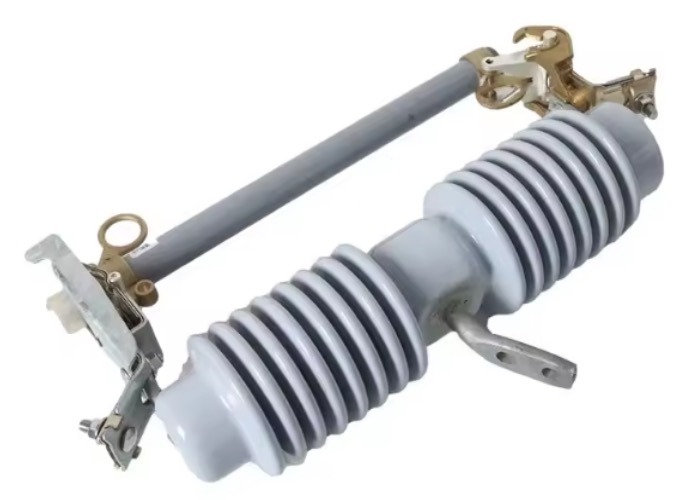
The Engineering Guide to 11kV-36kV Drop-out Fuse Cutouts: Ensuring Grid Reliability and Safety
Introduction In the hierarchy of electrical distribution, the Drop-out Fuse Cutout (DOFC) is the sentinel of the transformer. For a procurement manager or a lead engineer at a utility contracting firm, the choice of a fuse cutout is a balance between initial capital expenditure and long-term operational stability. A single failure in a $50 component can lead to thousands of dollars in downtime and emergency repair labor. This article provides a deep technical dive into the architecture, material science, and selection criteria for high-performance fuse cutouts in modern grids.
1. The Small-B Buyer’s Dilemma: Why Cheap Cutouts Cost More
Small-to-medium enterprises (SMEs) and regional contractors often face the temptation of low-cost components. However, “budget” cutouts frequently suffer from three fatal flaws:
- Mechanical Misalignment: Poorly machined hinges lead to “stuck” fuse tubes that fail to drop after a fault, causing upstream circuit breakers to trip and expanding the outage zone.
- Arc-over Failures: Insufficient creepage distance or low-quality porcelain leads to tracking and flashovers during humid or salty conditions.
- Galvanic Corrosion: Non-standard hardware plating results in rusted operating eyes within six months, making the unit impossible to service with a hot stick.
2. Anatomy of Excellence: Material Science in AsiaPower Cutouts
2.1 The Evolution of the Fuse Tube
The heart of the cutout is the fuse tube. Standard tubes use bone fiber lining which can absorb moisture. AsiaPower utilizes a Synthetic Arc-Extinguishing Lining encased in an Epoxy Fiberglass Shell.
- Inner Lining: Specifically engineered to release de-ionizing gases when the fuse link melts, snuffing out the arc in milliseconds.
- Outer Shell: Finished with a high-gloss, UV-resistant coating to prevent fiber-blooming and tracking.
2.2 Contact Dynamics and Silver Plating
High contact resistance is the enemy of longevity. Our contacts are made of high-conductivity copper alloy with Heavy Silver Plating. This ensures minimal voltage drop and prevents the overheating that causes “nuisance” fuse meltings.
3. Technical Specifications and Standards Compliance
When drafting a tender or a purchase order, the following parameters are non-negotiable for ensuring grid compatibility:
- Rated Voltage: 11kV, 15kV, 27kV, 33kV, 36kV.
- Rated Current: 100A or 200A.
- Interrupting Capacity (IC): Ranging from 8kA to 12kA. A procurement manager must match the IC to the calculated short-circuit current of the specific feeder.
- Insulation Type: Silicone Rubber (Polymer) for high-pollution zones or Porcelain for traditional reliability.
- Standard Compliance: ANSI C37.42 and IEC 60282-2.
4. Installation and Maintenance Best Practices
Proper installation is as critical as the product quality. Our engineers recommend:
- Angle of Inclination: Ensuring a 15° to 20° tilt to guarantee a gravity-assisted drop.
- Torque Management: Avoiding over-tightening the mounting bracket to prevent micro-cracks in the porcelain base.
Contact our engineer team for more specification and discount.