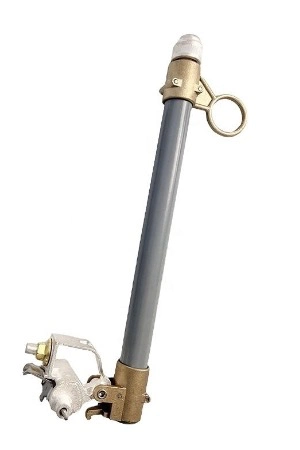
For power distribution engineers and international procurement managers sourcing overhead line protection, the Distribution Fuse Cutout (DFC) is a foundational asset. However, when issuing Requests for Proposals (RFPs) or managing supply chains, technical ambiguity often arises regarding its two most critical components: the Fuse Tube (Disconnect Holder) and the Fuse Link (Element).
While both are integral to the dropout mechanism, they serve entirely different thermodynamic and electrical functions. Misunderstanding their differences leads to incorrect inventory specification, premature equipment degradation, or catastrophic grid failures.
This guide provides a comprehensive technical comparison aligned with IEC 60282-2 and IEEE C37.41/42 standards.
1. The Core Distinctions: Structural vs. Sacrificial
To optimize your supply chain, it is essential to categorize these components by their functional roles:
- The Fuse Link is the sacrificial, calibrated electrical element that detects and interrupts overcurrents.
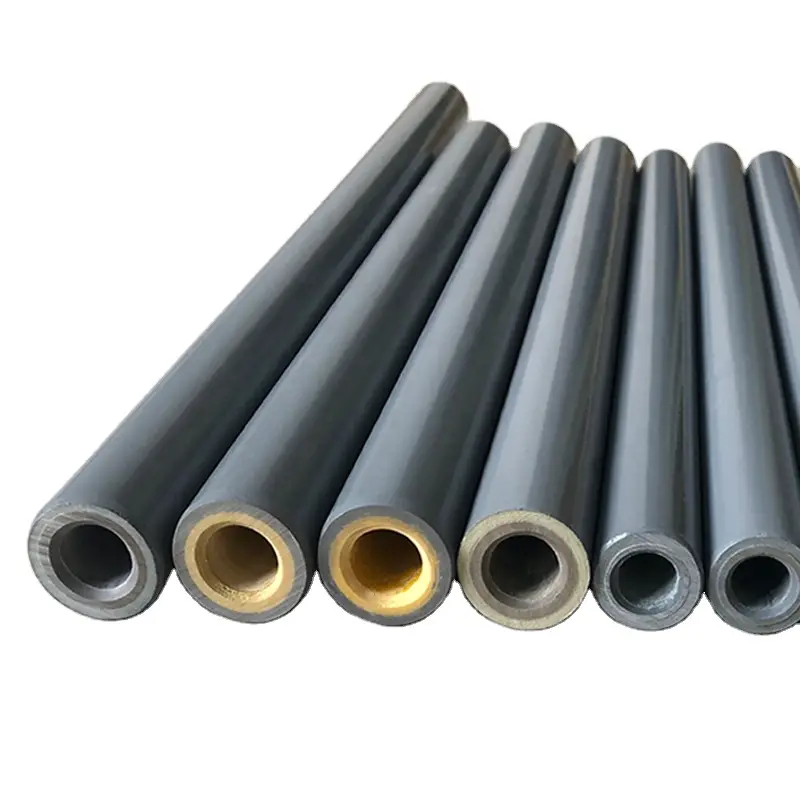
- The Fuse Dropout Tube is the structural, reusable housing that manages the intense thermal and mechanical forces generated during arc interruption and facilitates the physical “dropout” action.
2. Deep Dive: The Fuse Link (The Electrical Intelligence)
The fuse link is a high-precision consumable installed inside the fuse tube. It is engineered with a specific melting time-current characteristic (TCC) to provide coordinated overcurrent protection.
Technical Composition
A standard button-head fuse link consists of a button head, a washer, a fusible element (usually made of silver, copper, or tin), a high-strength strain wire (to withhold mechanical spring tension), and a flexible copper tail.
Key Procurement Standards (IEC 60282-2 & IEEE C37.42)
When procuring fuse links, you must specify the speed ratio and thermal tracking characteristics, usually designated by standardized types:
- Type K (Fast-acting): Has a speed ratio (ratio of melting current at 0.1s to 300s) of 6 to 8. Widely used for rapid clearing.
- Type T (Slow-acting): Has a speed ratio of 10 to 13. Designed with a thermal delay to withstand temporary inrush currents, such as transformer magnetization or motor startups.
Procurement Risk Tip: Poorly manufactured fuse links suffer from “corrosion aging” or geometric deviations in the element wire. This alters the TCC curve, causing premature blowing under normal load or failing to trip during a fault, destroying downstream transformers.
3. Deep Dive: The Fuse Dropout Tube (The Mechanical Arc Extinguisher)
The fuse tube is a reusable, rigid cylinder that remains latched in the cutout body until a fault occurs.
Technical Composition & Material Science
The tube must withstand immense internal pressures during fault clearing. High-quality dropout tubes feature a dual-layer construction:
- Inner Lining: Typically made of vulcanized fiber or a synthetic bone-fiber material. When exposed to the high temperature of an electric arc, this lining rapidly gasifies, releasing an intense blast of de-ionizing gases that cools, compresses, and extinguishes the arc.
- Outer Shell: Constructed from UV-resistant fiberglass filament winding coated with an epoxy resin. This layer provides the mechanical beam strength and weatherproofing required for decades of outdoor exposure.
The Dropout Mechanism
The fuse link is pulled tight inside the tube and secured at the bottom casting. The tension of the fuse link physically holds the tube’s bottom hinge in a locked, upright position.
When the fuse link melts during a fault, this mechanical tension is instantly lost. The bottom hinge collapses under spring and gravity forces, causing the tube to drop down cleanly into an open, visible isolation gap.
4. Technical Comparison Matrix for Sourcing
| Feature / Metric | Fuse Link (Element) | Fuse Dropout Tube (Holder) |
| Primary Function | Overcurrent detection and melting circuit interruption. | Arc containment, gas de-ionization, and physical dropout actuation. |
| Classification Standard | IEC 60282-2 / IEEE C37.42 (Type K, T, Slomo, etc.) | IEC 60282-2 / IEEE C37.41 (Amperage & BIL rating dependent) |
| Lifespan / Reusability | Single-use consumable. Must be replaced after every fault clearance. | Multi-use asset. Reusable for multiple operations until the inner lining erodes. |
| Critical Specifications | Rated Current (In), Speed Ratio (K or T), Melting I^2t characteristic. | Continuous Amperage (e.g., 100A/200A), BIL (e.g., 110kV/125kV/150kV), Fault Interrupting Rating (kA). |
| Key Material Defect Risk | Improper alloy purity leading to TCC curve drift. | Delamination of fiberglass or poor gas evolution of inner lining leading to tube rupture. |
5. Strategic Sourcing Metrics for Procurement Managers
When managing tenders for overhead line distribution accessories, ensure your technical evaluation criteria include the following checklist:
1. Matching Amperage Capabilities
Fuse tubes are typically rated for 100A or 200A continuous current. A 100A fuse tube can accommodate any fuse link rated from 1A up to 100A. Ensure your procurement tracking prevents field operators from attempting to fit a 140A fuse link inside a 100A tube, which will cause catastrophic thermal destruction of the tube assembly.
2. Fault Interrupting Capacity (Asymmetrical kA)
While the fuse link dictates when the circuit trips, the fuse tube dictates how much fault current the cutout can safely extinguish. Ensure the tube’s rated asymmetric breaking capacity matches or exceeds your substation’s calculated maximum short-circuit current (e.g., 8kA, 12kA, or 16kA).
3. Environmental Adaptation (Moisture & UV Protection)
For tropical, high-humidity, or coastal grids, the outer coating of the fuse tube must be verified via accelerated weathering tests (ASTM standards). Water ingress into the fiberglass matrix of a fuse tube will cause an internal tracking fault, leading to a catastrophic flashover before the fuse link even has a chance to melt.
Summary
For effective grid asset management, treat the Fuse Link as a high-volume precision commodity requiring tight metallurgical quality control, and the Fuse Dropout Tube as a heavy-duty mechanical safety housing requiring robust material science and precise mechanical tolerances. Ensuring both conform perfectly to IEC 60282-2 guarantees optimal system coordination and field safety.