1. Introduction: The Hidden Cost of Component Failure
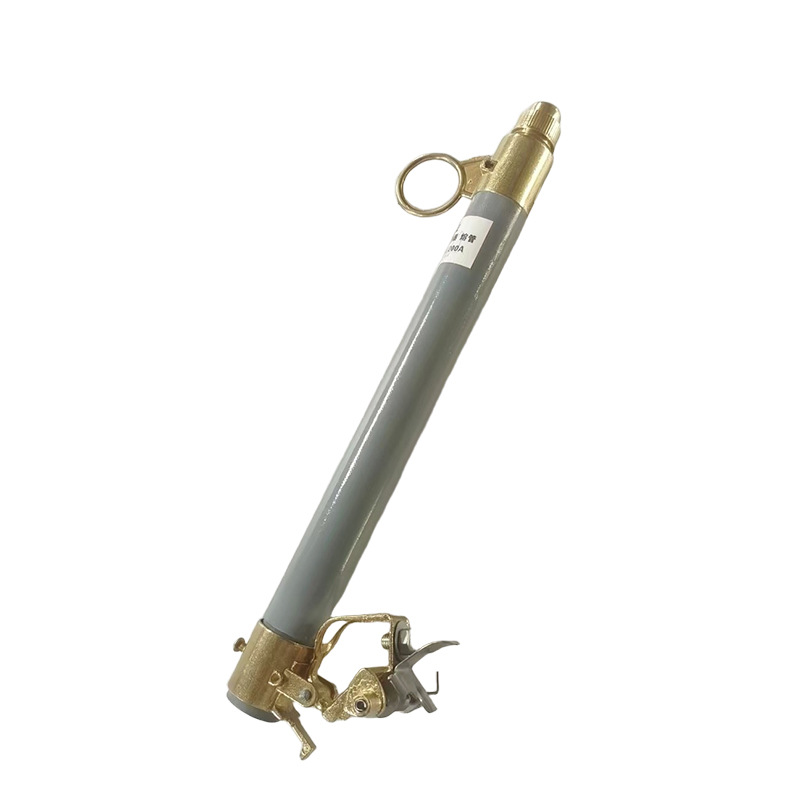
For power utility operators and infrastructure contractors in Latin America, the Middle East, and Southeast Asia, the reliability of overhead distribution networks is the backbone of regional economic stability. A critical yet often overlooked component is the Fuse Holder Assembly (or Fuse Carrier). When these assemblies fail due to subpar materials or imprecise manufacturing, the result is not just a blown fuse—it is increased downtime, potential equipment damage, and escalated maintenance costs. For many local project managers, balancing the need for cost-effective aftermarket parts with the requirement for OEM-level reliability is a constant operational challenge.
2. The Engineering Nexus: Why Integrated Assemblies Outperform Bare Tubes
Many procurement teams source fuse tubes and hardware separately to save costs. However, technical experience proves that the assembly process is just as critical as the material quality.
- Precision Alignment: Our assemblies utilize automated robotic crimping and positioning. This eliminates the dimensional variance inherent in manual assembly, ensuring that the pin-to-pin alignment is consistent across every unit.
- Arc-Quenching Efficiency: The fuse holder must withstand severe fault current interruption. By integrating high-performance filament-wound fiberglass tubes with high-conductivity bronze alloy hardware, we ensure that the arc-quenching performance meets international standards, providing a “plug-and-play” solution that minimizes field installation errors.

3. Regional Environmental Engineering: Built for the Extreme
Generic components often fail when exposed to the specific climatic stressors of your operating regions.
- Tropical High-Humidity (Latin America & Southeast Asia): Moisture ingress is the primary cause of dielectric breakdown. Our fuse holders are treated with advanced hydrophobic coatings, which prevent surface tracking and ensure the fiberglass structure remains chemically stable even in 90%+ humidity.
- Desert/Arid Zones (The Middle East): Intense UV radiation causes standard resins to become brittle and crack within months. We utilize UV-inhibited epoxy resin systems specifically formulated to maintain structural integrity under high-intensity solar exposure, preventing the “shedding” or surface degradation that leads to failure.
4. Standardized Interchangeability: A Guide for Maintenance Teams
One of the most frequent technical complaints from field engineers is the inability of replacement parts to fit legacy cutout brackets. To ensure seamless replacement, procurement managers should verify the following:
- Dimensional Integrity: Confirm that the assembly matches the geometry of industry-standard units (e.g., AB Chance style). Our production process ensures that every assembly adheres to strict tolerance standards, allowing for immediate replacement without requiring on-site modifications.
- Reverse Engineering Capabilities: If you are operating legacy cutout systems for which OEM parts are no longer available, do not settle for forced retrofitting. We provide precision reverse-engineering services—simply provide the technical drawings or a sample of your current hardware, and we will reproduce the assembly to exact specifications.
5. Conclusion: Beyond Part Procurement
Selecting a Fuse Holder Assembly is a decision that impacts the security of your grid. By choosing a manufacturer that controls the entire production chain—from the filament winding of the fiberglass to the final assembly of the copper hardware—you move from being a simple purchaser to a strategic infrastructure manager.
Technical Checklist for Your Next Procurement:
- Does the supplier provide UV-resistance certification?
- Are the conductive components made of high-copper content alloy for better electrical contact?
- Is the assembly process automated to guarantee dimensional uniformity?
Ready to upgrade your infrastructure with reliable, precision-engineered fuse holder assemblies? Contact our engineering team today with your specifications for a custom quotation.